Showing posts with label Free. Show all posts

Sunday, January 6, 2013

The Top 10 From 2012: Free Indie Games


With 2012 now a distant memory, it's time to reflect on the year's greatest achievements and rank them in order of their success. Since I hardly ever play new releases, I can't compile a list of the top ten releases from 2012. Instead, I'll be highlighting some of my best articles from 2012. Shameless self-promotion with an opportunity to get some of my favorite pieces on the front page again. Huzzah.

I didn't play as many free indie games as I would've liked in 2012, so this list isn't much of a "top 10" -- it's more like "the only 10" ranked in order of preference. Some of them were a little disappointing, but the top half of the list were all outstanding, and even the bottom half showed a lot of potential. Continue reading for the full list.

Thursday, November 8, 2012

Impressions of Fallen Earth


Fallen Earth is a game I'd been interested in for a while now, ever since I read player comments describing it like a multiplayer Fallout, crossed with hints of STALKER. I'd been very wary about playing another MMORPG, however, because it seems like every MMO out there insists on being a huge waste of time. But since Fallen Earth went free-to-play a little more than a year ago, I thought maybe I'd at least give it a shot. The promise of a post-apocalyptic MMO was fairly interesting at first, but then it quickly bogged down to usual MMO nonsense; tedious level-grinding via repetitive tasks in a laboriously over-stretched world.

The game starts out with an instanced tutorial sequence that explains the premise, tells you a little about the backstory, and shows you how to perform basic actions within the game. It contains an awful lot of cutscenes and dialogue which lend the tutorial a compelling narrative thrust, unlike lots of other MMOs I've played that just dump you aimlessly into a starting town. Once you're through with the tutorial sequence, it's clear that there's actually a main questline to follow -- with an actual story -- but that's also when it turned into mindless MMO-style content and lost its appeal for me. Continue reading for more of my early impressions of Fallen Earth

Wednesday, October 31, 2012

Viel Dinosaurier in 1916: Der Unbekannte Krieg


1916: Der Unbekannte Krieg is a free indie horror game by students of the Danish Academy of Digital Interactive Entertainment. Set during World War I, you play as a German soldier trying to escape the creatures that hunt you through the narrow, claustrophobic trenches by reaching the ladder at the opposite end of the territory. The creatures hunting you are dinosaurs, and you have no way of fighting them. You just run, using whatever tools you can find in the death-ridden trenches.

The game is ultimately fairly short and simple -- it only takes a few minutes to beat if you know what you're doing -- but odds are it'll take you several attempts before you really start to figure it out. The main criticism I have if that it takes too much trial-and-error to learn the basic mechanics of the game, which may turn people off, but once you understand how things work and what you're supposed to be doing, 1916: Der Unbekannte Krieg is a really tense, heart-pounding experience.

Tuesday, October 30, 2012

You Can't Escape From Nightmare House 2


Nightmare House 2 is one of the coolest horror games I've ever played. What's even more remarkable is that it's a free source mod for Half-Life 2. A first-person shooter with a light emphasis on action and a heavy emphasis on horror, the game begins with you gaining consciousness next to a wrecked vehicle in front of an abandoned house. Which also happens to be haunted. After escaping the house, the rest of the game takes place in the Never Lose Hope Hospital, where you regain consciousness in a padded cell only to find that something else has gone terribly wrong. 

For comparison, Nightmare House 2 feels a lot like the original F.E.A.R. with hints of Condemned: Criminal Origins (both by Monolith), both in terms of quality and content, if you were to take those games and condense them down to about 2-3 hours. NH2 features some very good attempts at horror as well as some decently enjoyable puzzles and action, all tied together with an interesting story. There are a few hiccups in its design, which I'll discuss in the full article, but it's a great game that's definitely worth playing.

Sunday, October 28, 2012

The Slender Man is Always Right Behind You


Slender is a free indie horror game based on the mythos of the slender man, an abnormally tall, faceless man in a dark suit and tie. Occasionally spotted in the background of photographs, people reportedly go missing and disappear in his presence. He is an entity of pure fear, silently stalking people until they go mad. And then he takes them.

The premise of the game is pretty simple: you're alone in a pitch black wood with nothing but a flashlight at your disposal, tasked with collecting eight pages scattered about the woods. Who you are and why you're searching for these eight pages is never explained; it's just an arbitrary goal to give you something to do whilst being terrorized by the silent madness-inducing presence of the slender man.

My review continues after the jump.

Erie: Somewhat Eerie, Not So Scary


Erie is a free first-person horror game made by students of the University of Utah's EAE Master Games Studio Program, using the Unreal Development Kit. You play as Oliver Victor, a Red Cross investigator circa 1966, sent to search for missing workers after a nuclear power plant suffers a partial meltdown. Once in the facility, you become trapped and have to flee from the mutated horrors and escape with your life.

In terms of horror, Erie is competently designed at first, with effective (albeit somewhat crude) audio and visual effects contributing to the game's immersive atmosphere. For the first several minutes, that's basically all the game is: atmosphere. Your walk through plant provides a basic tutorial for controls, which should be perfectly familiar to anyone who's ever handled a keyboard before, while providing a few atmospheric scares to put you just a little on edge. Bats fluttering out from a vent in the ceiling, a woman crying behind a locked door, sudden noises, monsters darting past a window, and so on.

My reviews continues after the jump.

Wednesday, June 27, 2012

A Vague and Confusing Process


I'm not really sure what to make of Process, a free indie game by TrainYard in which you're given 20 minutes to stop a train from an accident that will send it flying off the rails at high speed. It's basically a point and click adventure game rendered in a fully 3D, first-person perspective; you explore a few train cars solving puzzles and trying to find a way to escape from the train's inevitable fate. Process boasts some good atmosphere and an interesting premise, but the execution of its gameplay made it difficult for me to appreciate the game as a whole.

The thing that bothered me most is that everything is so intentionally vague. There's something to be said for games that leave themselves open to interpretation, but you really need to have some kind of concrete foundation upon which to base your conclusions, which Process makes no effort to establish. There are some really bizarre "cutscenes" that remain completely unexplained, and the ending offers no hints as to where you are or what's really going on. The ultimate effect was for me to sit back with no idea what I'd just played and no idea what to make of it.

The game's vague intentions even permeate the gameplay, with many of your actions not producing a clear effect on the environment, and with some of the puzzles not following a clear logical direction. There's one control panel, in particular, that's meant to fix an "unknown error" message that pops up when you try to engage the emergency brakes, but there's no indication anywhere that it has any connection to the brakes, it's not readily apparent how you're even supposed to interact with it, and it's not even clear what you ultimately have to do with it. You just kind of bumble around doing random things, not really understanding what it is you're actually doing.

I don't understand what Process was really all about. The game's development blog claims that "it's a game about predetermination of events and the subjectiveness of perception of the surrounding world," which sounds like kind of a pretentious way of saying they wanted to have weird, vague, unexplained things happen in order for different players to experience and interpret them differently. That's an interesting idea, but I'm willing to bet most people had very similar, confused reactions to the game as I did. If you're interested in trying it out, you can download it here

Tuesday, June 12, 2012

Impressions of Blackwell's Asylum


Blackwell's Asylum is a short, free indie stealth-horror game by students of the Danish Academy of Digital Interactive Entertainment, and is currently available on Steam as part of a spotlight for the winners of Intel's Level Up 2011 contest. The competition was designed for indie game developers to create game demos, with selected winners receiving a little bit of funding and the potential to develop their demos into full games. I hadn't heard of this at all until the spotlight appeared on the front page of the Steam store. But as a fan of horror games, I decided to give Blackwell's Asylum a shot. And it ultimately disappointed me. 

You play as an inmate of a women's asylum trying to escape the facility by hiding from the patrolling wardens. It starts out very interesting, with a great deal of atmosphere and a unique visual style almost reminiscent of something you'd see in a Tim Burton movie. Everything looks warped and distorted, lending the environments a very uncanny feeling; the sound effects are minimal but do a sufficient job of layering the atmosphere on top of you. As promising as these aesthetics are, however, the gameplay felt kind of boring to me, as I'll explain in the full article.

Wednesday, April 18, 2012

Impressions of Nehrim: At Fate's Edge


If you haven't heard already, Nehrim: At Fate's Edge is a free total conversion mod for The Elder Scrolls IV: Oblivion. It's a completely stand-alone game with its own original world, characters, and quests so impressive in ambition that it rivals the scale of the vanilla Oblivion experience. And in most ways, it's actually better than Oblivion, which is either a heaping bit of praise for Nehrim's developers, SureAI, or a scornful derision of Bethesda. I'm going with both. After all, it's kind of sad when a group of volunteer modders can make a better game than a multi-million dollar studio of (supposedly) industry-leading professionals.

I'm somewhere between 20 and 30 hours into Nehrim and I've only just finished the first of (I believe) five chapters. I'll be writing a full review once I've finished the game, but since I'm still only a fraction of the way through it, and I'll almost assuredly be distracted by Risen 2 when it launches, I figured I'd go ahead and publish my early impressions of the game. So far, I've been really enjoying it. It feels far more like Gothic 2 with an Oblivion skin, which makes it a far more compelling experience, even though Nehrim can't quite escape some of the inherent problems of Oblivion. More of my impressions after the jump.

Wednesday, March 14, 2012

Narrating The Stanley Parable


*Note: this review article is of the 2011 HL2 mod. For my review article on the 2013 retail release, click here

The Stanley Parable tells the story of a man named Stanley, who works for a company where he's known only as "employee number 427." Every day, he sits at his desk in room 427 pushing buttons on a keyboard, following the commands that stream in through a monitor. He relishes this job, always happy to press the buttons when the orders arrive. But one day, the orders stopped coming in. Puzzled at this unusual circumstance, Stanley leaves his post to find out what's going on.

You assume control of Stanley as he gets up to leave his post, searching the building for answers. A narrator tries to tell Stanley's story a certain way, describing Stanley's thoughts and your actions. But given that you're in control of your perspective, you have the free will to follow his narration or to disregard him and do your own thing. Numerous junctions present themselves with two options, and the story branches into entirely different paths depending on your decisions.

The Stanley Parable is an intelligent bit of metafiction. It's a story about a story, told by a narrator who realizes this is a video game. It explores concepts of free will, gets you thinking a little more deeply about video game design, and offers some witty commentary on the process of playing a video game. It's one of the smartest mods I've ever played, and it's presented with lots of charming style, which makes it truly stand out as an exceptional source mod that is absolutely worth playing.

Saturday, March 10, 2012

Dear Esther, Don't Come Back


* Note: this review is of the 2008 Half-Life 2 mod, not the 2012 retail release version.

How many years have I put off playing Dear Esther? Apparently four, by the looks of it, as the original Half-Life 2 mod was released back in 2008. When I first heard about it, I was intrigued. Experimental first-person narrative storytelling in a video game? A ghost story that emphasizes exploration and offers a uniquely haunting atmosphere? It sounded great, but for some reason I never played it. With the recent Steam release of a newer, updated version of the game, I thought maybe it was time to finally getting around to playing it.

And boy was it underwhelming. When the screen faded to black at the very end, my only thought was "that was it? This is the critically-acclaimed game everyone's been talking about all these years?" It does more than just "stretch" the definition of what constitutes a video game -- it brazenly defies it with practically zero interactivity. Even though the writing is rather poetic and the voiced narration is well-done, the story lacks any kind of narrative thrust. And so, I was not impressed with Dear Esther. More of my thoughts after the jump.

Sunday, January 29, 2012

In the Bleak of Winter: The Snowfield


There are certain kinds of games that warm my heart, even when their atmosphere is chilling my bones. The Snowfield is one of them. Everything about it makes me feel cold, vulnerable, and depressed as I wander through the stifling aftermath of a recent battlefield, clutching my wounds and fearful of freezing to death as I try to help the grieving and wounded soldiers around me. And yet there's something ever-so-slightly optimistic about it that, in the end, lifts me up from the grim bleakness that I feel from playing it.

Made by students of the Singapore-MIT Gambit Game Lab, The Snowfield is really more of an experiment in video game design than it is an actual "game." It's an interactive experience with a primary goal/objective that you can fail to complete (and thus die), much like any other game, but its general presentation and mechanics might be a turn-off for some. But if you're the kind of person who values and appreciates atmosphere, then this is one you don't want to miss. It's free and can be played here, in your browser with the Unity Web Player plug-in. More of my thoughts after the jump.

Sunday, January 22, 2012

Abobo's Big Adventure Does it All

Do you remember the 1980s, back when arcades were still immensely popular and the concept of the home gaming console was just entering people's understanding? If so, then you should play Abobo's Big Adventure. Even if you don't remember that glorious decade, I'm sure the history books have taught you all you need to know to appreciate this game.

Abobo is a tribute to the classic Nintendo Entertainment System that hit the US in 1985 (and 80s pop culture in general). You play as Abobo on a quest to rescue his kidnapped son, Aboboy, by playing through eight NES-themed levels. Each level has its own unique gameplay styles much like the games they reference, such as Double Dragon, Zelda, Contra, Mega Man, Super Mario Bros, and Pro Wrestling (among others). Just watch the trailer, and everything will seem right in the world.

Abobo is a real treat to play. Its gameplay styles are all wonderfully faithful to the source material while also adding enough stylistic twists to keep the game interesting. Not to mention, Abobo is just a fun character to control, and the humor, animation, and design make his adventure absolutely worth playing. You can play it on its own website or on Newgrounds for free. 

It's also worth mentioning that I had only ever played about a half-dozen NES games in my life (Duck Hunt, Mario, Zelda, Metroid, Castlevania, etc), and yet I was still able to enjoy Abobo's Big Adventure and pick up on most of its references. So that just goes to show you that it really is quite good at what it's going for. 

Saturday, January 7, 2012

The Top 10 From 2011: Free Indie Games

It's that time of year when everyone reflects on the year's greatest achievements and ranks them in order of their success. Since I hardly ever play new releases, I can't compile a list of the top ten releases from 2011. Instead, I'll be highlighting some of my best articles from 2011. Shameless self-promotion with an opportunity to get some of my favorite pieces on the front page again. Huzzah.

I played a lot of free indie games in the past year. Most of them were pretty good, but some of them were a lot more memorable than others. Some of them had that extra spark of creativity to make them truly unique and original. Some of them were just a lot more fun than the rest. Not all of these games were released in 2011, but here are my top ten favorite free indie games that I covered in 2011. Click the full article for the list.

Friday, December 16, 2011

No More Room in Hell for This Game


My experience with No More Room in Hell, a George A Romero-style zombie survival-horror mod for the source engine, has not been very pleasant, but what's ever pleasant about the zombie apocalypse? This is supposed to be a slower-paced game about survival, making it through large cities by following objectives (typically "get from point A to point B," or "get key item C for door D") all-the-while scavenging for ammo, supplies, and avoiding the hordes of shambling zombies that populate the large maps.

The idea was to create a zombie game that plays more like classic zombie films, with a greater emphasis on survival and strategic maneuvering than straight-up action. This is a novel ambition, since most of the popular zombie games aren't really survival horror any more. No More Room in Hell shows a lot of potential, but in its current beta state (1.02b), it misses the mark quite badly. It's a game that I really want to like, but the experience has been a turn off and I'm left abstaining until future versions (hopefully) expand on its content and fix its design problems.

You can download the mod on Desura, ModDB, and FilePlanet and play for free. I would actually recommend checking it out if you're somewhat curious about it, so that you know to keep an eye out for its future updates; just consider yourself warned that it's still rather rough around the edges. Keep reading for my own review / analysis / break-down.

Thursday, December 15, 2011

Voiding Expectations


This Half-Life 2 mod, Void, is something truly unique and remarkable. Developed by students of the Digipen Institute of Technology, Singapore, and receiving awards and recognition at the Chinese Independent Games Festival, it's something that I've seen before in other games (most notably Singularity), but it's never been as good as this.

Void is a first-person puzzler that has you navigating through a crumbling, dilapidated building with the aid of time-altering bubbles (called "rips") that change the space within the bubble back to the way it was in the past. In the game's current state, your goal is just to get to the exit of each level (much like Portal), but with an optional side quest to collect a total of six paintings to unlock something special at the end. Also in your handy toolset is a pair of glasses that let you see into the other dimension (how things look in the past, if you were to cast a rip).

This is a game that shows a tremendous amount of potential, the kind of thing that could easily develop into its own full-length game to rival even the likes of Portal, and is fun enough even as it is now. It's definitely worth checking out. More of my opinions after the jump.

Saturday, December 3, 2011

Indie Platforming Two'fer: Depict1 and Loved


In a holiday season that emphasizes good behavior for just rewards, it's especially fun to play two indie platformers where breaking the rules and disobeying authority is sometimes the only way to get ahead.

Depict1 (top left) has a slightly "Portal" feel about it, with you essentially going through test chamber puzzles guided by a disembodied voice. The voice gives you instructions on how to play, but the question arises very early on whether or not you can trust his/her/its advice, when it gives you clearly incorrect information that does nothing or just straight-up kills you. Between reverse psychology and outright lies, the game goes into a metaphysical realm that almost defies the conventions of ordinary video games.

Loved (bottom right) gives you the freedom to obey or disobey the voice's commands. Following orders causes the game's visuals to become clear and detailed, while disobeying turns the visuals into crude blocks and distortion. The voice rejects you from the very beginning, declaring you the opposite gender of whatever you picked, and when asked if you want a tutorial, you'll either be denied one (if you said "yes") or be told "you will fail" (if you said "no"). The nature of the voice (and indeed, the game) changes depending on your choices.

The thematic exploration of both games is very similar, in each case offering a unique twist on the way you play the game. Depict1 can be played on Newgrounds or on Kongregate; Loved can be played on Newgrounds or on Kongregate.

Tuesday, November 22, 2011

Despair in Life and Death: Wither


What's this? More GameBoy graphics on the almighty PC? Surely a modern PC can handle better graphics than the 1989 portable gaming brick, right? Well, yes, they can, but this is a design choice called style. I guess.

Wither is a free RPG Maker game by Rastek. It's a short adventure game where your only goal is to collect 12 flowers to place on your recently-deceased brother's gravestone. There's no combat or any other tricky nonsense, you just explore the small town, talk to people, find clues, and collect flowers. The game design is intelligent, with sufficient clues to guide you through without obvious solutions, but the story (or premise, perhaps the better term) is the real hook as you try to figure out what happened and what's going on.

This one is open to interpretation, meaning that a lot of its meaning comes from your own thoughts and reactions. These kinds of games have a tendency to come off as pretentious, but I don't get that vibe from Wither: it's a solid game with enough cranial stimulation to make it worth recommending. (It takes about 30 minutes to play.) My own analysis comes after the jump.

Friday, November 18, 2011

A Smashing Good Time: Super Smash Land


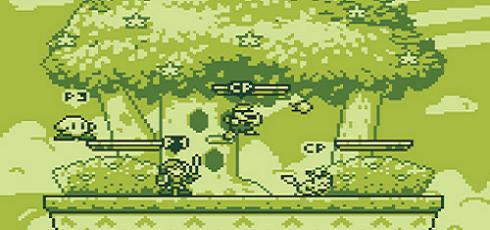
In an ever-popular avenue of indie games development wherein people "demake" classic games for older consoles, Dan Fornace has given us Super Smash Land, a free "GameBoy rendition" of the Super Smash Bros. franchise. Everything about it screams nostalgia, harkening back to the good old days of the early 90s portable gaming scene and the usual fun of smashing classic Nintendo characters to bits. Super Smash Land is definitely worth some of your time; it's impressive and fun, but I do have some minor nitpickings to lay against it. Video footage and my full run-down after the jump.

Sunday, November 6, 2011

Spelunking for Treasure and Damsels


Spelunky, a free indie game by Derek Yu, may be the most addicting game I've played in a long while. A 2D platformer/roguelike, your goal is to make it to the bottom of each level, collecting as much treasure as you can and rescuing damsels along the way, all while avoiding traps and enemies. The levels are randomly generated to be unique every time, which is essential because the game's challenging difficulty means that you will die. A lot. And that's what makes it so damn fun. Throw in some interesting items and a monetary system, and you've got a game that keeps bringing you back for "just one more try."

For the more detailed description, continue reading the full article.