Showing posts with label Piranha Bytes. Show all posts

Sunday, December 22, 2019

Gothic Remake Playable Teaser - Feedback and Review


In a surprise news release that seemingly no one saw coming, THQ Nordic announced that they're looking to remake the original Gothic, and released a lengthy demo (or as they call it, a "playable teaser") as proof of concept, available for free on Steam to anyone who owns any of Piranha Bytes' games on Steam. This news follows seven months after THQ Nordic acquired Piranha Bytes, the small German studio responsible for the original Gothic trilogy, making them and all of their IPs official subsidiaries of THQ Nordic. The remake, however, is not being designed by Piranha Bytes, as they're presumably busy working on Elex 2 -- rather, it's being handled by THQ's Barcelona studio. The demo opens with a few slides of text from the designers stating that they're huge fans of Gothic and wanted to revamp some of its clunkier, more out-dated designs while "maintaining and strengthening" the "amazing atmosphere" of the original game, but rather than simply doing a straight one-to-one remaster, they wanted to treat the project like more of a re-imagining, adding a bunch of new content and expanding on existing ideas while putting their own unique twist on what they consider to be a "legendary game." The purpose of the demo is to showcase early ideas they're working with and to gain feedback from fans about the direction they're going with the remake -- upon completing the demo, it actually links to a survey where you can fill out responses and grade them on their efforts.

In essence, this development process feels like a more open form of Early Access and will hopefully provide the Barcelona studio the opportunity to shape the remake into something that will live up to the great legacy of Gothic, and which will satisfy fans of the original game while also introducing it to a new audience. While the demo showcases some promising new ideas, and I'm absolutely ecstatic for the opportunity to play a brand new Gothic game heavily-inspired by the original, the current version of the demo isn't really what I would want out of a Gothic remake, or even a re-imagining. Supposedly they're still very early in the alpha stages of development and nothing is set in stone -- a full release isn't even a guarantee at this point -- but early impressions suggest to me that, although they may have a lot of love and respect for Gothic, it seems like they don't fully understand what it was that made Gothic so unique and special in the first place, because there are a lot of design elements that seem to go directly against the core design philosophies of Gothic and which make it hard for this demo to truly feel like Gothic.

Saturday, November 16, 2019

Risen - Review | A 10-Year Retrospective


Risen
is a fantasy-themed open-world action-RPG by Piranha Bytes, a small German studio who were previously responsible for the first three Gothic games -- the first two of which are some of the best RPGs of all time. Following the colossal mess that was Gothic 3, Piranha Bytes split from their publisher, JoWood, who retained the rights to the Gothic name, thus forcing Piranha Bytes to create a new series which would serve as a spiritual successor to their beloved Gothic series. As such, Risen sticks pretty closely to the formula set up by Gothic 1 and 2, so if you're at all familiar with those games then you should know pretty much exactly what to expect with Risen.

Tuesday, September 17, 2019

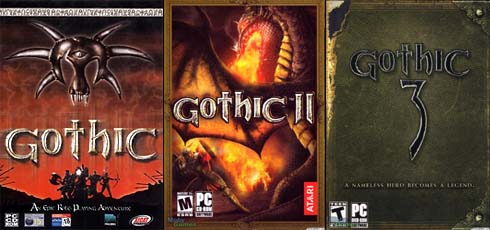
Gothic 3 Sucks -- A Critique From a Longtime Gothic Fan (Updated Ver 1.1)

Note: This article was originally published in January 2018, but has since been updated with extra content, including a full video review.

Gothic and Gothic 2 are two of my favorite games of all time, being two of the games that had the most influence on my young and developing mind when I first played them in the early 2000s. And yet I harbor virtually no love for Gothic 3. I've barely mentioned it in any of my Gothic articles because I don't even like to consider it part of the series; it doesn't connect to Gothic 2 very well, and the whole gameplay formula is a radical departure from what made Gothic and Gothic 2 so great. Even though it was made by the same developer, Piranha Bytes, Gothic 3 feels like a different game by a different group of people who had only a vague understanding of what the Gothic games were, and who were told to make everything "bigger and more epic" in order to compete with the likes of Morrowind and Oblivion. Spoiler alert: they failed miserably.

Gothic 3 is a classic case of a game being ruined by ambition, of a developer trying to reach beyond their own means and biting off more than they could chew. The game, besides being unfinished and under-developed, was a buggy mess upon its release, and it took years of fan-made patches to supposedly "fix" the game and make it functional. The community patch is now almost one-third the file size of the base game, and contains numerous bug fixes and stability tweaks, and also attempts to completely redesign and rebalance the combat system. I played the game at launch (late 2006) before the community patch even existed, and again a few years later with it, and while the patch truly does a lot to improve the game's overall playability, it doesn't (and simply cannot) fix the core gameplay design and story problems, which are the real reasons Gothic 3 sucks -- not just the bugs and broken combat that the patch supposedly fixes.

Normally I'd be content to dismiss the issue and move on with life (the game's over a decade old, after all, and I haven't even played it in about eight or nine years), but I find it surprising that, even today, people still speak highly of Gothic 3. With the recent release of Elex, newcomers to Piranha Bytes games frequently ask about their previous games and which ones are worth playing, and people readily leap to defend (or even recommend) Gothic 3, usually with the caveat that you need to play with the community patch. That's sound advice, of course, but I just can't justify recommending Gothic 3 to anyone because of how bad of a Gothic game it is, and how mediocre it is, just as a game in general. So in this article I'll be explaining my opinion on Gothic 3 and why I think it sucks.

Monday, May 27, 2019

Gothic 1+2: Masterpieces in Immersive Design


Gothic 1 and 2 are some of the best open-world action-adventure-RPGs of all time, and part of the reason why is their uniquely immersive gameplay designs. Developed by the small German studio Piranha Bytes and released in 2000 and 2002 in their native Germany, Gothic 1 and 2 were truly ahead of their time; while not the first to implement scripted NPC scheduling and reactions, they were already doing so years before Bethesda supposedly pioneered that concept with Oblivion, while some of their other design elements like in-world skill trainers and the process of forging weapons aren't really seen in other games, even to this day with almost two decades of industry advancements since the original Gothic. Some of their design elements may be a little quaint or antiquated at this point, but for the most part the immersive design of Gothic 1 and 2 is timelessly brilliant and contributes to a feeling of atmospheric immersion that often isn't found in other games.

Tuesday, May 7, 2019

Gothic 1 vs Gothic 2 - Which is Better?


Gothic 1 and 2
are some of my favorite games of all time, being some of the most deeply satisfying and immersive action-adventure-RPGs that I've ever played. While most people in the early 2000s were raving about how great Morrowind was, I was busy playing Gothic, and my experience with those games fundamentally altered my ability to appreciate other, similar types of games because the early Gothic games were truly ahead of their time and did some really impressive things that other developers weren't doing at the time, and still aren't doing to this day. I sometimes struggle, however, to decide which of the two Gothic games I like better. With Gothic 2 being a direct sequel to the first game, directly continuing the story with many of the exact same characters in the exact same world, and being built on the exact same game engine, they're about as similar as two games in a series can be, and so I often like to think of them as essentially one game broken into two parts. At the end of the day, however, they are separate games with some key differences, so I thought I'd take some time to review the two games against one another and discuss the relative pro's and con's of each game.

Tuesday, April 30, 2019

The Importance of Gothic 1+2's Music: A Review of Kai Rosenkranz's Soundtracks


A lot of different components go into making Gothic 1 and 2 such great games, but one of its more subtle, understated triumphs is the excellent quality of its soundtrack, composed by Kai Rosenkranz. Music is something that I feel often gets overlooked when it comes to video game reviews, because most gamers aren't music critics, and aren't very knowledgeable about what goes into making great music -- we just know what sounds good, and what doesn't. The thing that makes Gothic's soundtrack so good, to me, is that it strikes a perfect balance between melody and ambiance -- it has enough melodic structure that you can pick out themes and quickly come to recognize its motifs, while also serving as an ideal backdrop to set the tone of your adventures, without crossing too boldly into the foreground and calling too much attention to itself.

Monday, February 26, 2018

What All is Wrong With Gothic 1's Back Cover


I was looking at a few games on my shelf recently and decided to grab a few and take a closer look at them. Upon closer inspection, I realized that a lot of what's printed on the back of the box for Gothic 1 is straight up wrong or subtly misleading. I'm not sure if this is due to basic ignorance, as if the person writing these blurbs on the back of the box had no first-hand experience with the game and was simply making stuff up based on general statements they'd been told by someone else, or if it's a deliberate marketing spin to try to sell the game. This has no bearing on the quality of the actual game, of course, and I don't think it even affects anyone anywhere anymore anyway anytime since anyone buying Gothic for the first time is likely buying it digitally based on word of mouth, not what's printed on the back of the box. Most people won't ever even see the back cover unless they own a physical copy or deliberately search for pictures of it. Anyway, since I found this so interesting, I figured I'd share these observations with you and give you a quick rundown on what all is wrong with the back cover.

Saturday, January 13, 2018

Gothic 3 Sucks -- A Critique From a Longtime Gothic Fan

Note: this article has since been updated with extra sections, more elaborations, and a full video. See the updated post here for the updated version.

Gothic and Gothic 2 are two of my favorite games of all time, being two of the games that had the most influence on my young and developing mind when I first played them in the early 2000s. And yet I harbor virtually no love for Gothic 3. I've barely mentioned it in any of my Gothic articles because I don't even like to consider it part of the series; it doesn't connect to Gothic 2 very well, and the whole gameplay formula is a radical departure from what made Gothic and Gothic 2 so great. Even though it was made by the same developer, Piranha Bytes, Gothic 3 feels like a different game by a different group of people who had only a vague understanding of what the Gothic games were, and who were told to make everything "bigger and more epic" in order to compete with the likes of Morrowind and Oblivion. Spoiler alert: they failed miserably.

Gothic 3 is a classic case of a game being ruined by ambition, of a developer trying to reach beyond their own means and biting off more than they could chew. The game, besides being unfinished and under-developed, was a buggy mess upon its release, and it took years of fan-made patches to supposedly "fix" the game and make it functional. The community patch is now 1.5GB of files (the whole "vanilla" version is only 4.6GB, total) and contains numerous bug fixes and stability tweaks, and also attempts to completely redesign and rebalance the combat system. I played the game at launch (late 2006) before the community patch even existed, and again a few years later with it, and while the patch truly does a lot to improve the game's overall playability, it doesn't (and simply cannot) fix the core gameplay design and story problems, which are the real reasons Gothic 3 sucks -- not just the bugs and broken combat that the patch supposedly fixes.

Normally I'd be content to dismiss the issue and move on with life (the game's over a decade old, after all, and I haven't even played it in about eight or nine years), but I find it surprising that, even today, people still speak highly of Gothic 3. With the recent release of Elex, newcomers to Piranha Bytes games frequently ask about their previous games and which ones are worth playing, and people readily leap to defend (or even recommend) Gothic 3, usually with the caveat that you need to play with the community patch. That's sound advice, of course, but I just can't justify recommending Gothic 3 to anyone because of how bad of a Gothic game it is, and how mediocre it is, just as a game in general. So in this article I'll be explaining my opinion on Gothic 3 and why I think it sucks.

Wednesday, November 29, 2017

Why Elex is Better than Skyrim and The Witcher 3


Skyrim
and The Witcher 3 are two of the biggest, most popular open-world action-RPGs ever created. Both of these games set a new standard for the genre when they were released in 2011 and 2015, with absurdly high metascores clocking in at 94 and 93, respectively. I was not as enamored with either of these games as the general public was, despite having a strong affinity for and appreciation of open-world RPGs; I had a lot of negative criticism to level against Skyrim, and even while praising The Witcher 3 rather extensively, I felt like it, too, had a lot of issues that seriously diluted and detracted from the experience. Both top-notch AAA productions with excellent presentation and smooth, accessible gameplay, that ultimately felt lacking in meaningful depth.

Enter Elex, the latest open-world action-RPG from Piranha Bytes, the small German studio behind the Gothic and Risen series. On a surface level it's actually much worse than either Skyrim or The Witcher 3, largely due to production limitations of being a much smaller studio (about 30 people, as opposed to hundreds) with a much smaller budget (about two million dollars versus 80 million plus). There's a distinct lack of polish across almost every aspect of the game, which on first impression can make it seem like a thoroughly mediocre, undesirable experience, but if you can get past these surface-layer blemishes there's a surprisingly deep, rich, and rewarding gameplay experience. By no means is Elex a perfect game, but I honestly feel like it's better than both Skyrim and The Witcher 3 in some of the areas that matter most when it comes to open-world action-RPGs.

Tuesday, November 14, 2017

Things Gothic 1 and 2 (Still) Do Better Than Elex


Piranha Bytes have been making open-world action-RPGs for nearly 20 years, starting with the first Gothic in 2001, and now with their most recent game, Elex, released a few weeks ago. All of their games (including the Risen series, released between Gothic and Elex) follow the same general formula with the same components; a big open world full of really tough enemies, where you have to explore, complete quests, and learn new skills to work your way up the food chain so that you can survive and complete the main quest. They've basically been making the same game for almost two decades, with a fresh coat of paint and a handful of tweaks and twists each time, and yet their newer games have never quite reached the level of success that the original Gothic games achieved, in terms of their gameplay design and execution.

Elex is a surprisingly strong effort that I'd say is almost as good as Gothic 2. It has a lot more modern polish, including much more accessible controls, and an actual tutorial to teach you how to play the game (but that's to be expected in this day and age), plus a much bigger world that still contains Piranha Bytes' signature detailed density, and improved quest design that gives you more options and more consequences for how you choose to resolve quests. It's actually better than Gothic and Gothic 2 in a lot of ways, and yet, surprisingly, there's a lot of good stuff about Gothic and Gothic 2 that have somehow never made it into subsequent Piranha Bytes games, and which are sorely missing in Elex. They had a pretty solid formula with those early games, and so it's weird, disappointing, and somewhat frustrating that, about 15 years later, some of the things that made Gothic and Gothic 2 so great still haven't found their way into Piranha Bytes' newer games.

My intention with this article is not to disparage Elex, because it really exceeded my expectations, even though it's still a little rough around the edges, in some ways. Rather, I want to celebrate Gothic and Gothic 2, and also use this as an opportunity to remind Piranha Bytes (if they're reading this) of some things that were great in those games, that really need to make a return in Elex 2

Sunday, November 5, 2017

Beginner's Guide to Elex: Tips and Advice

(Note: This article has since been updated with a few new tips and a full video version of the guide. See the updated Version 1.1 article here.)

Helping you get the most enjoyment out of Elex's sometimes rough and daunting beginning.

Elex is a third-person open-world action-RPG from Piranha Bytes, a small German studio, that blends traditional fantasy, science fiction, and post-apocalypse themes. Set on a world 200 years after a comet wipes out nearly all life on the planet, the survivors have split into three factions that use elex, a mysterious substance that appeared with the comet, in their own unique way to fulfill their own goals and agendas. You can be a Dungeons & Dragons-style berserker who wields swords and casts fireballs, or a Mass Effect-style cleric who uses plasma rifles and psionic mind control, or a Mad Max-style outlaw who makes their own gear from scrap and enhances their abilities with powerful stims. It's got a huge world full of diverse environments, tons of quests, lasting consequences for decisions you make, and three different factions you can join, all of which radically alter your gameplay experience by offering unique equipment and skills.

It's surprisingly good, but like other Piranha Bytes games, it has a lot of quirks and idiosyncrasies that can make it difficult for unseasoned initiates to figure out how the game actually works, what you should be doing, and so on, combined with a really steep difficulty curve that makes no effort to hold your hand. For many players, this can lead to a lot of confusion and frustration right at the start of the game, which is never a good thing, obviously, but is especially unfortunate because Elex offers an extremely compelling, rich, and rewarding experience for those who can get into it. As a long-time Piranha Bytes veteran, I still struggled with a few things in my first playthrough, and had some of my expectations subverted when I realized, dozens of hours into it, that I wished I had done things a little differently.

The purpose of this article, therefore, is to help new (or prospective) players with general tips and advice about how the game works and what you should expect, with a few basic, spoiler-free strategies to facilitate a better gameplay experience. A large part of the fun in these games is the satisfaction and reward that comes from exploring the world and discovering things on your own, so I won't be going into specific detail about "go here and get this item, then do this quest as soon as possible, build your character exactly like this, etc," because I want to leave you that room to figure things out for yourself. But some things are tough to figure out without doing a lot of trial-and-error and seeing how things pan out over the course of a 50-100 hour playthrough. So, here are some of my thoughts and observations after pouring 143 hours (and counting) into multiple playthroughs, which I think should be helpful to other new players.

Thursday, February 19, 2015

Morrowind Sucks, aka, Morrowind is Overrated

Like everyone else, I have fond, nostalgic memories of playing Morrowind back in the early 2000s, but I was never able to get into it properly. Back then I only put about 10-20 hours into it before losing interest and giving up my playthrough. And yet, every time I've seen screenshots or heard its music over the past decade, I've felt a desire to reinstall the game and relive the glory days that everyone always harkens back to when discussing Oblivion or Skyrim. And then, whenever I do, I'm soon reminded of why I was never able to appreciate Morrowind, even back in its prime.

It's a shame, really, because I think Morrowind truly is the best of the modern Elder Scrolls games. It has the most interesting world to explore with its completely unique fauna, wildlife, and architecture, and it has the deepest, most complex stats-based RPG mechanics of any modern Elder Scrolls game. There's a reason, after all, that Morrowind was such a popular hit in 2002. For many young gamers, it was their first experience diving into such a deeply rich, complex open-world; for me, I'd already been spoiled by Gothic and Gothic 2, which made it painfully obvious how soulless and mediocre Morrowind really was. And now that I've finally finished a full 90+ hour playthrough with both expansions, I'm still not convinced that Morrowind is all that great.

Wednesday, September 17, 2014

Risen 3: Titan Lords Doesn't Suck


It's been over a decade since Piranha Bytes released a game worthy of praise and recognition. Gothic 3 was a bloated, broken mess that required extensive community patching to make it remotely tolerable; Risen showed some promise but was essentially only half of a game; and Risen 2 was so thoroughly mediocre that I couldn't even write a proper review of it. Gothic and Gothic 2, on the other hand, were such phenomenally outstanding, perception-altering experiences that I'll continue to play every Piranha Bytes game until the day I die, just on the chance that they'll make another masterpiece as good as the original Gothic games.

I'm pleased to say that Risen 3: Titan Lords is the most fun I've had playing a Piranha Bytes game since Gothic 2. That's not to say Risen 3 is as good as Gothic 2, but it comes close. Indeed, there are times when Risen 3 feels a lot like Gothic 2, and it captures the spirit of the original Gothic games better than any other game since. Risen 3 even goes so far as to (finally) fix nearly all of the major issues that afflicted both Risen and Risen 2, making it the most polished and thought-out PB game of the "modern era." At no point did I ever encounter any glaring oversights or questionable design decisions like the things that pissed me off in the other games.

Unfortunately, Risen 3 is not without its problems. The combat is too easy, the progression lacks focus, and the story never really gets going, but compared to previous PB efforts, these problems are minimal and don't actively take away from the game's enjoyment. Rather, it feels as though Risen 3 simply missed some of its potential. It's disappointing to realize how much better the game could have been with some simple tweaks and a little more time in development, but the game itself, as it exists now, is a respectable effort by the small German team that deserves some success. If you like action-adventure-RPGs with immersive worlds that are genuinely fun to explore, then Risen 3 is definitely worth your consideration.

Sunday, April 29, 2012

Impressions of Risen 2: Dark Waters


This past Friday, Piranha Bytes released Risen 2: Dark Waters, a pirate-themed action adventure role-playing game and sequel to Risen from 2009. Piranha Bytes are best known for their previous work on the Gothic series, with Gothic 2 considered by many to be one of the greatest RPGs of all time. I've been a longtime fan of Piranha Bytes, loyal through the missteps of Gothic 3 and their recovering process with Risen, and was optimistic for a brighter future with Risen 2. Now that I've played about six hours of it, I almost fear that Risen 2 may be a case of "one step forward, two steps back."

From what I can tell, Risen 2 seems to have all of the core elements I've come to expect from a Piranha Bytes game; primarily, a rich and organic world that's interesting to explore, and decisions with concrete consequences and role-playing options. The dialogue this time around is especially enjoyable, and many of the new features (like "dirty tricks" in combat) are welcome additions. But even ignoring some of the more glaring superficial issues, there are still a number of questionable design elements that really seem to detract from the game's potential, leaving me with mixed opinions. Continue reading for the rest of my quick impressions.

Saturday, February 11, 2012

On the Gothic Series


Playing through Skyrim makes me realize how great the Gothic series was (and remains). There's always a void I feel from playing an Elder Scrolls game, and the Gothic games have always been there to remind me of how special a game can be when it's designed properly. I've known this ever since the back-and-forth releases of Gothic in 2001, followed by Morrowind in 2002, followed by Gothic 2 in 2003.

I'll go into more detail about TES in another article. For now, though, I want to take some time to reflect on the Gothic series, to compare each title's relative strengths and weaknesses, and to describe that special Gothic feeling that I often struggle to find in other games. I've written about Gothic before for a "Great Games You Never Played" article, which is worth a read for a more basic overview of the first game. My break-down of the full series comes after the jump.

Thursday, October 13, 2011

Great Games You Never Played: Gothic


"Fine, obscure gems." Part of a periodical series: Great Games You Never Played.

In 2001, Piranha Bytes created the pinnacle of action-adventure-RPGs: Gothic. Set in a magically-encapsulated prison colony where criminals are sent to mine magic ore for the war against the orcish armies, the convicts have revolted against the King's guards and now run the colony in anarchy. You play as a nameless convict who's just been tossed into the barrier. Initially tasked with delivering a message to the magicians at the castle, you become a key figure in trying to bring down the magical barrier and in stopping an event that threatens to kill everyone in the colony.

Besides the wonderfully unique setting and premise, Gothic also boasts some of the most compelling gameplay ever. Carving your way up the ranks in a hostile dog-eat-dog prison, where strong beasts and monsters also roam, everything is dangerous and there's always a challenge waiting for you. It's a game that doesn't hold your hand, with death and treacherous enemies around every corner; leveling up and getting stronger is its own reward as you become better-equipped to brave the non-linear, free-roaming world of the colony. Its attention to detail also make it one of the most atmospheric, immersing game worlds ever.

If you're still not convinced of Gothic's supremacy in the world of western RPGs, continue reading for the more detailed description of its feats and strengths, with some embedded gameplay videos to illustrate.

Tuesday, July 12, 2011

Why Arcania Sucks


As a long-time fan of the Gothic series, nothing saddens me more than to see a beloved series turn to shallow mediocrity.  Actually scratch that.  I'd be more sad if the soul of the Gothic series were forever cast into oblivion, never to flex its mighty competition-crushing, standard-setting RPG muscle again.  Thankfully Piranha Bytes, the original developers of Gothics 1 through 3, are still alive and kicking, working this very moment on the glorious Risen 2.  With that in mind, I'm not really sad to find that Arcania: Gothic 4 sucks.  I'm just a little disappointed.  After all, how hard could it be to screw up the "Gothic" feel?
Apparently it's not so difficult, as Spellbound (in conjunction with JoWood) have shown us.  When I'd heard that Gothic 4 was getting a new developer, I was actually one of the few Gothic fans who had high hopes for the new game.  Gothic 3 was far from ideal, so I'd already learned to restrain my expectations, but I thought that a new developer could breathe new life into the series.  I told myself I'd enjoy the game for what it was and not flip out if it deviated from the other games.  And then Spellbound missed every mark and left me no choice but to go on a nerd rage.  Not only does Arcania share virtually no gameplay similarities to its predecessors, but as a game if fails to deliver anything remotely compelling, interesting, or entertaining.
Since Arcania's been out for the greater half of a year now, I'm not writing a full review.  Plenty of other smarter and more talented people have already spoken their minds on that issue.  Instead, I'll be making a list of things that were present in the first three Gothics (especially in G1 and G2), which Arcania is entirely lacking, with special emphasis on why these aspects are crucial to the compelling nature of Gothic.  Click below to continue to the full article.